
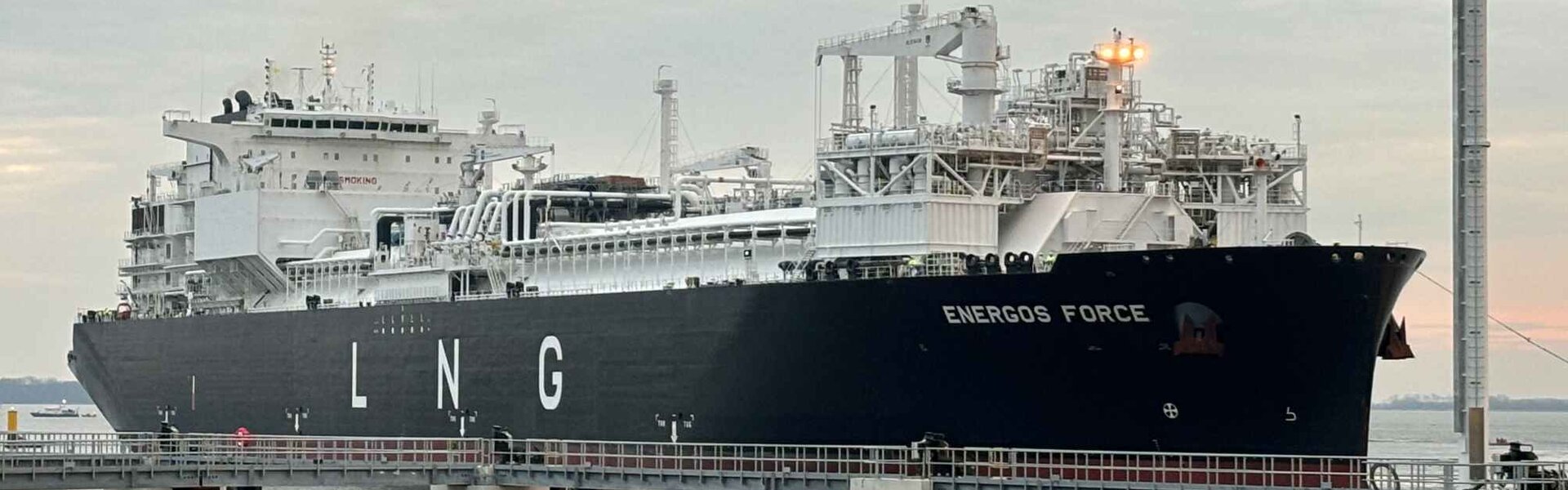
October 22: Cool-down der Energos Force
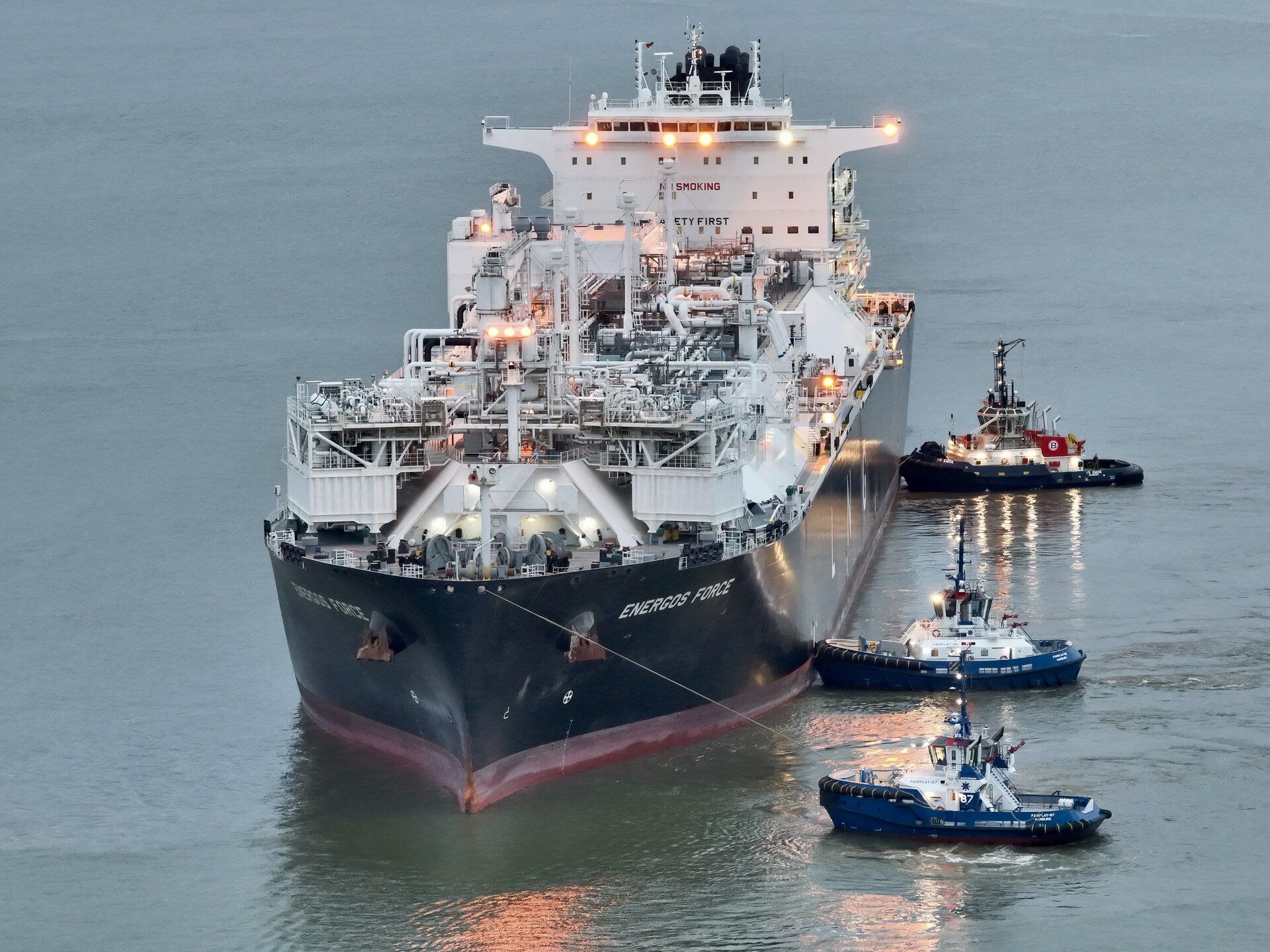
Preparations for the commissioning of DET’s Stade floating LNG terminal are in the home stretch. A crucial step now is the so-called cool-down of the FSRU Energos Force, a floating storage and regasification unit. The tanks must be cooled down and filled with a minimum amount of LNG at -162 degrees Celsius so that, in the next step in early November, the first LNG tanker can be unloaded in Stade. To this end, the vessel will depart as scheduled from its berth in the Stade-Bützfleth industrial port on October 23 for a few days to call at the port of Rotterdam. The interim period will be used for necessary dredging work on the berthing basin. The FSRU is expected to return at the end of October. DET will provide information on the next steps shortly thereafter.
Pictured is a black-and-white regasification vessel with tugs on the Elbe River
16 October: Focus on Safety and Functional Testing
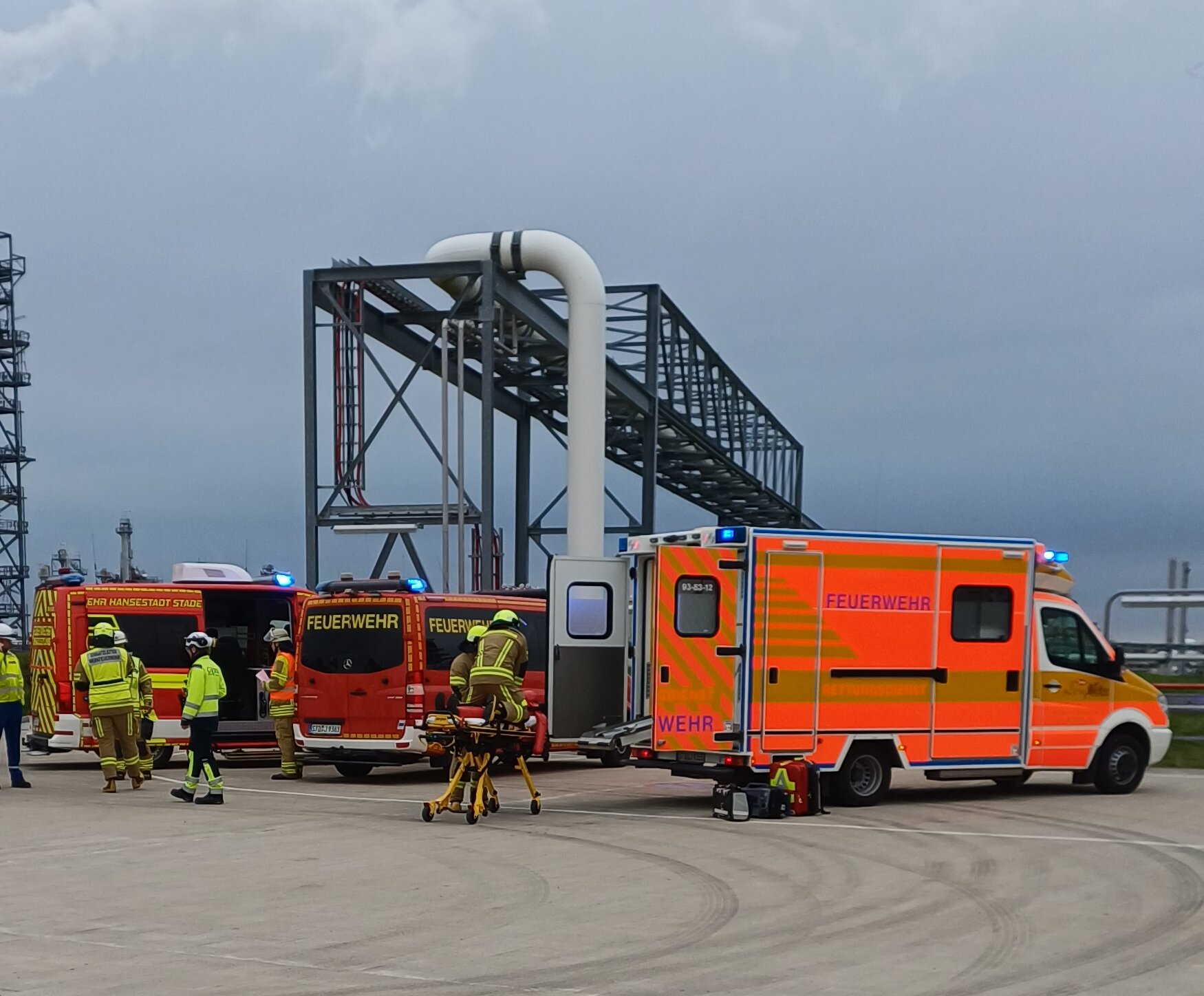
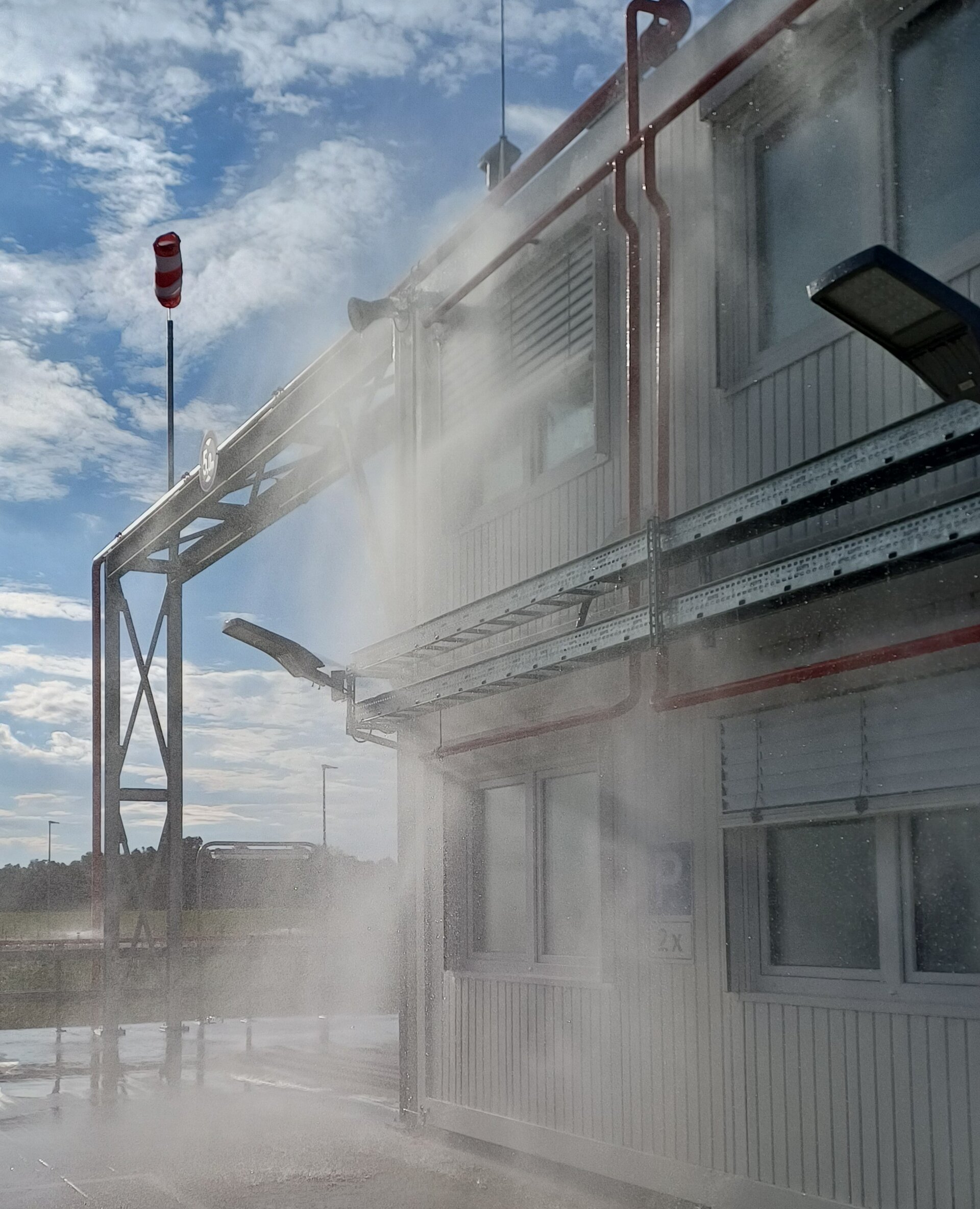
Important work and tests were also carried out at the Stade LNG terminal in recent days. In addition to inspecting technical equipment, a key focus was on preparations for potential emergency situations.
On 13 October, a rescue exercise involving the evacuation of injured persons from the FSRU Energos Force was conducted. Various rescue routes were tested, and the recovery of injured persons using a ladder truck was practised. Such exercises are an important part of safety preparations, helping to practise and evaluate procedures for real-life emergencies.
On 16 October, a test of the firewater sprinkler system followed. The control of the valves for opening and closing worked flawlessly, allowing key functions of the system to be verified.
These tests and exercises demonstrate that, alongside preparations for the technical commissioning of the terminal, checking the safety systems is also an important step towards ensuring the terminal’s safe operation.
September 15: Energos Force arrives in Stade
DET Begins Preparations to Commission the Floating LNG Terminal
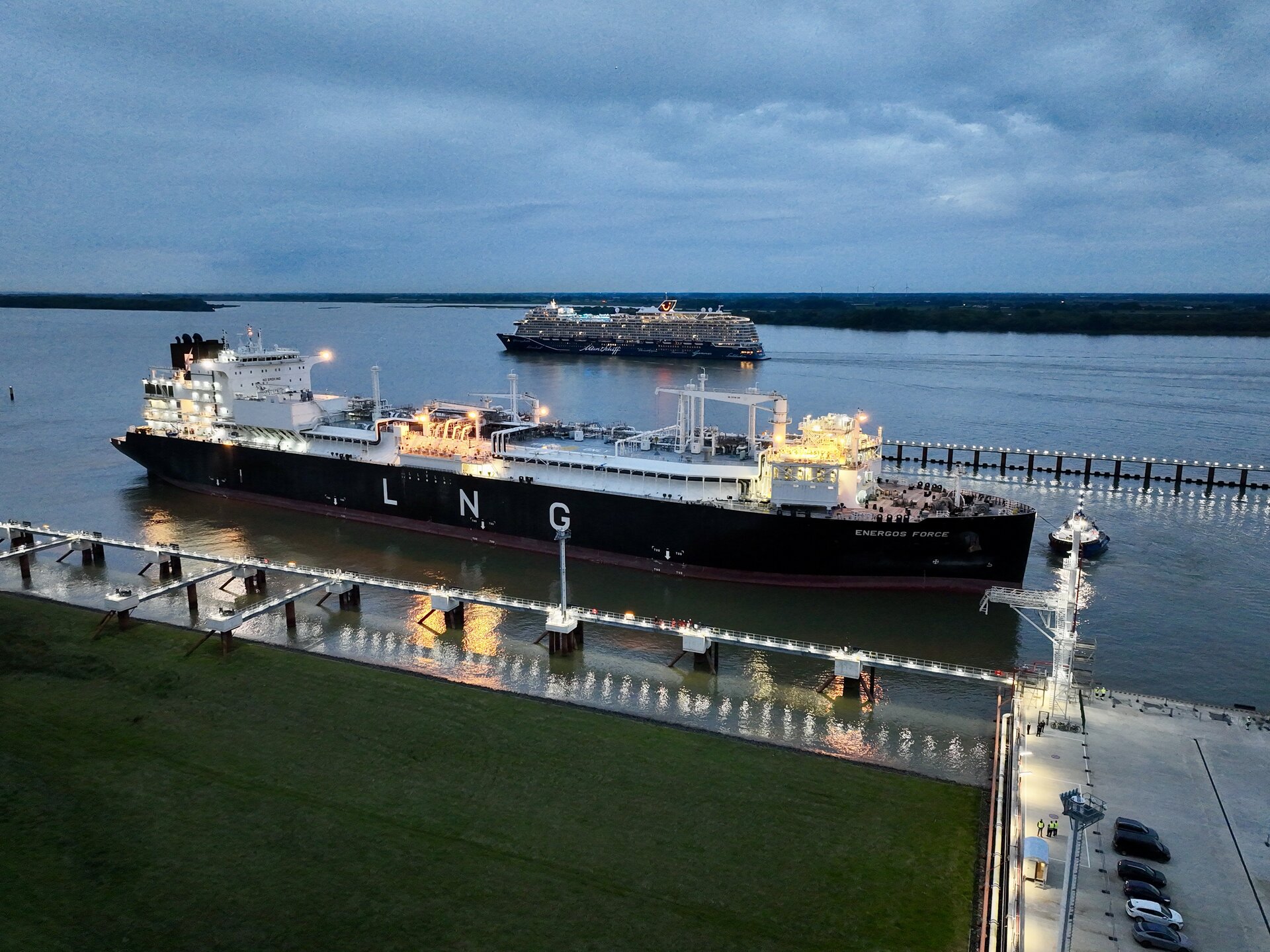
FSRU Energos Force vor dem AVG
The Floating Storage and Regasification Unit (FSRU) “Energos Force” docked yesterday at the new LNG terminal (AVG) in the Stade-Bützfleth industrial port. The arrival of the 294-meter-long vessel, chartered by Deutsche Energy Terminal GmbH (DET), marks the start of preparations to commission the Stade floating LNG terminal.
For 2027, DET expects the Stade terminal to feed up to 3.2 billion cubic meters of natural gas into the grid. This volume would be sufficient to supply approximately 2.6 million four-person households with heating energy for a full year. Niedersachsen Ports (NPorts) constructed the jetty specifically for the FSRU and the onshore terminal, which is still under construction.
September 3: Energos Force on the Way
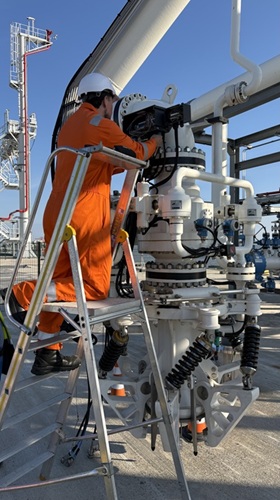
The loading arms are on the agenda again this week. They are the heart of the superstructure. Now that our partner companies have opened, overhauled, and reinstalled the spring assemblies for the quick-connect devices (QCDCs), it’s time to conduct mechanical functional tests of the control systems—and especially the loading arms—and make the necessary adjustments to ensure smooth operation.
Successful functional tests and their documentation are essential for safe operation and the terminal’s acceptance on the global market. The timing is right, as the subcharter agreement for the FSRU Energos Force has now expired, and the vessel is on its way back. It will return to Stade in September as planned, so that commissioning of the terminal can begin.
We then expect the first LNG tanker to arrive in November.
August 14: loading arms in focus
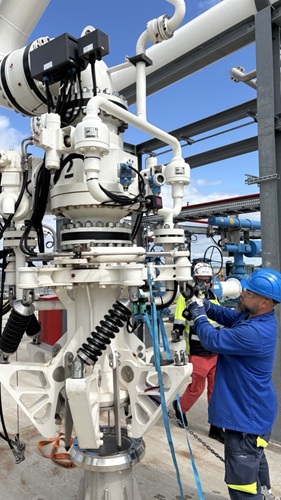
This week, the loading arms were the focus of work to complete the superstructure for our floating FSRU terminal in Stade. Among other things, our partner companies opened, overhauled, and reinstalled the spring assemblies for the quick-connect devices (QCDCs). For safety reasons, we are not showing this process in the photo, but only the final step after reinstallation: As you can see, an employee is polishing their surfaces here in preparation for subsequent treatment.
QCDCs are essential for smooth and consistently safe terminal operations. Their technical parameters, operating principles, and locations must be fully and accurately documented in accordance with regulations. This is also essential for security. With three terminals now successfully operational and operating at above-average capacity across Europe, we bring the experience and diligence required to handle all these essential steps professionally.
July 30: Working Hand in Hand Toward Our Goal
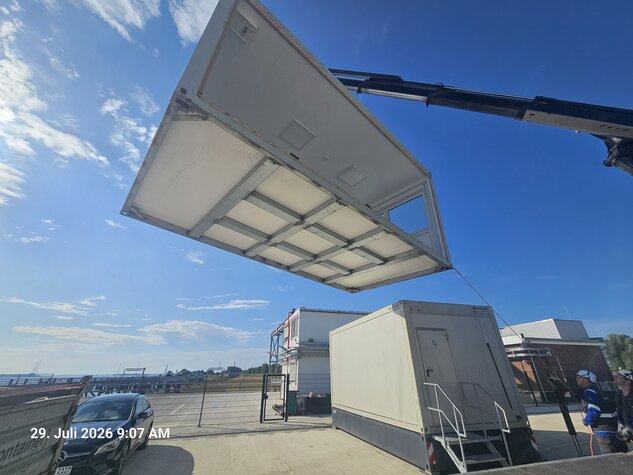
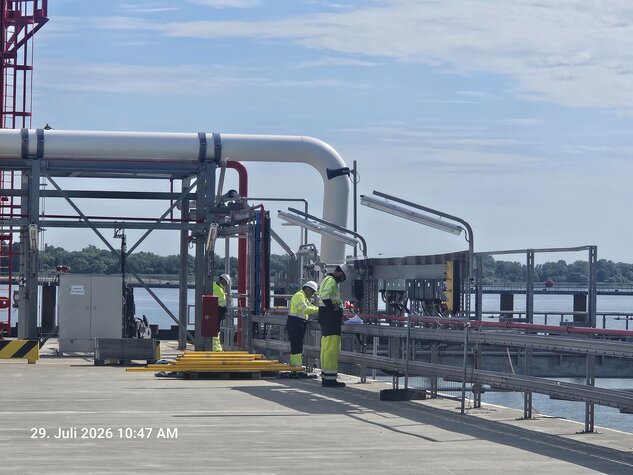
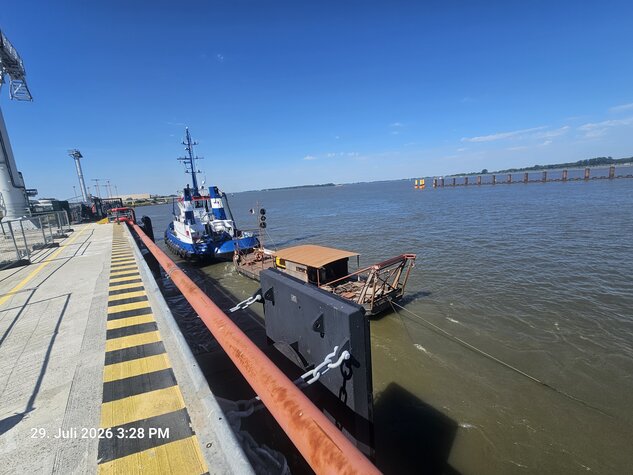
This week, we have once again stepped up our efforts to complete the facility: In addition to work on the superstructure, our partner companies Gasfin and Worley carried out preparatory inspections. Furthermore, we continued to finalize the essential documentation for the entire facility to ensure compliance with all national and international safety standards. Furthermore, the Lower Saxony port authority NPorts is conducting dredging work in the area of the FSRU Energos Force’s berth. Many thanks to everyone involved: We’re moving forward hand in hand!
July 3: The nexts steps
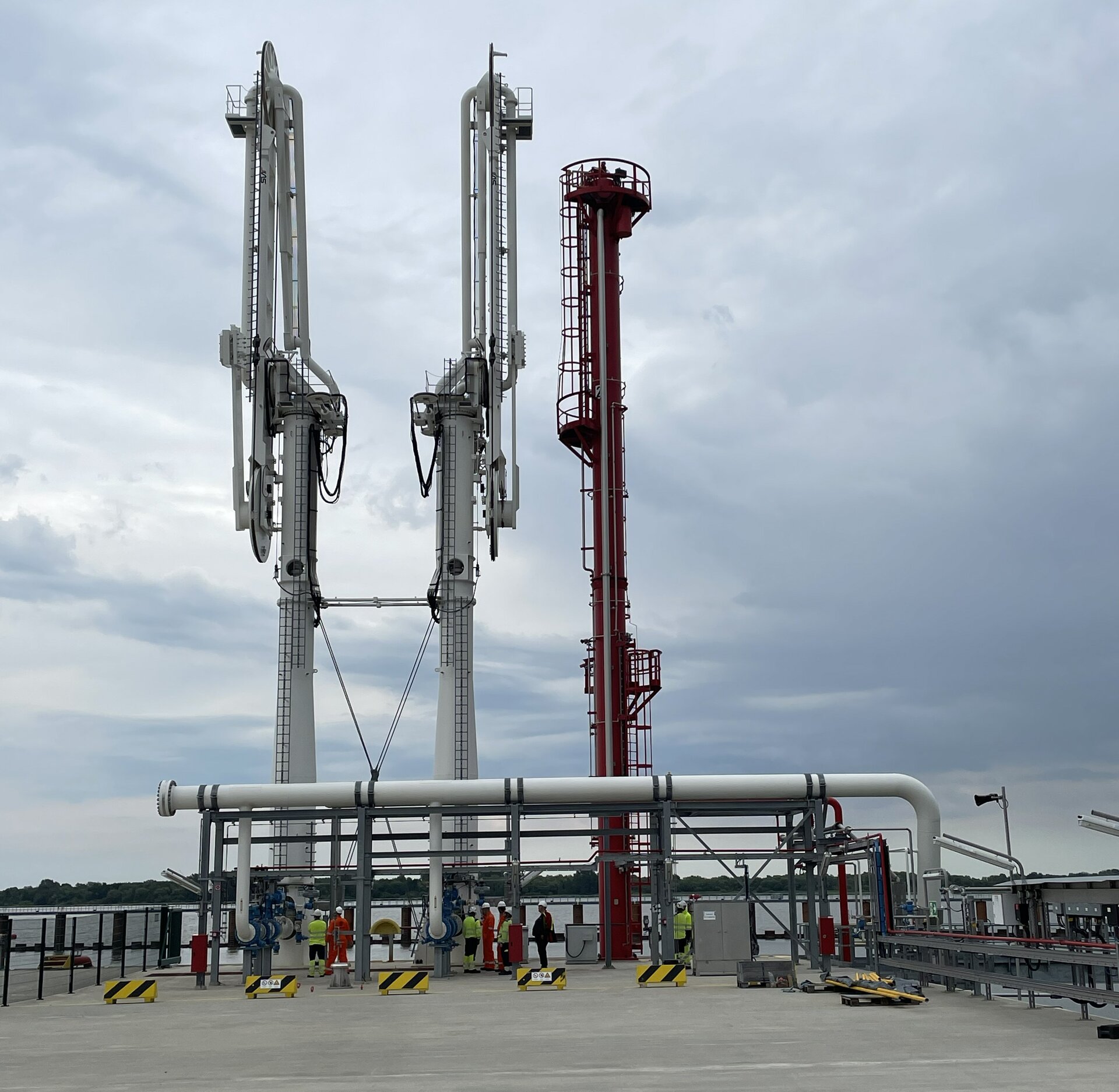
As part of several teams involving partner companies, DET is on site again this week to coordinate the construction work on the superstructure step by step until the Energos Force returns. Upon arrival, the regasification vessel will be connected to the loading infrastructure. Pictured here: the two loading arms, which form the heart of the jetty. They must be able to compensate for the Elbe’s water level, which fluctuates significantly due to tides. However, the Energos Force’s load level (whether there is a lot or a little LNG in the tanks) also influences how high the ship’s so-called “gas balcony” “hovers” above the quay edge. The loading arms are flexibly connected to this balcony. Incidentally, the regasified natural gas has a temperature of at least five degrees Celsius (usually a little higher) when it flows through the loading arms. The natural gas must be this warm in order to be fed into the gas grid.
June 10: Good news for Stade
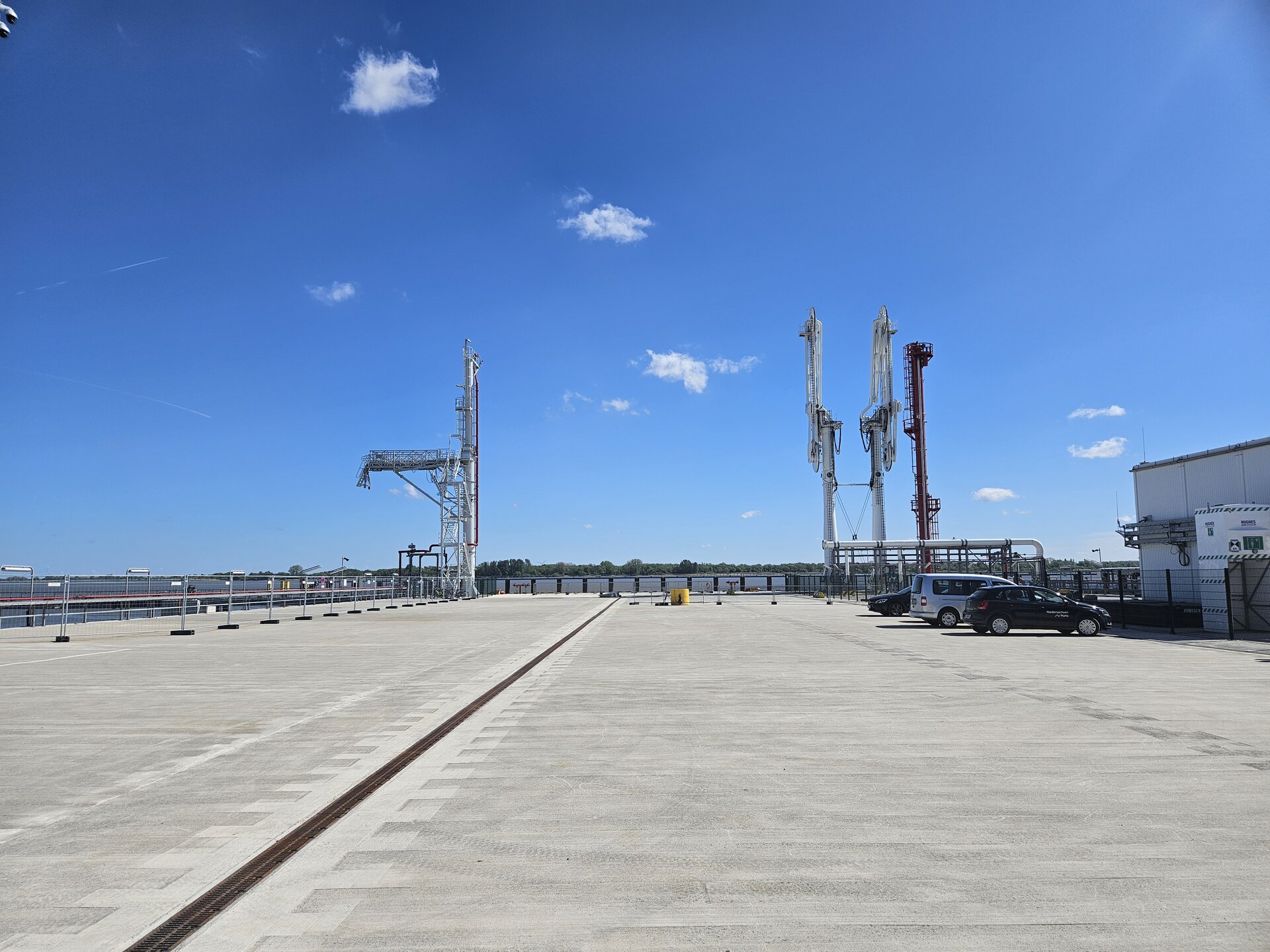
Good news for Stade as an energy hub and for Germany’s security of supply: After facing challenges during the construction of the floating LNG terminal Stade, the facility is now scheduled to commence operations in September. Over the past months, extensive technical and safety-related assessments, along with preparatory measures carried out on behalf of the operating company, Deutsche Energy Terminal GmbH (DET), now outline a clear roadmap toward the first LNG delivery.
In the meantime, the state-owned company sub-chartered the FSRU Energos Force—the regasification vessel designated for operation in Stade—and deployed it in Jordan. Contractual provisions ensure that the FSRU will return in time for the terminal’s commissioning phase at the jetty specifically constructed by the State of Lower Saxony in the industrial port of Stade-Bützfleth. This completes the federal government’s terminal concept for securing gas supplies, with Stade complementing the existing terminal locations in Brunsbüttel and Wilhelmshaven.
How to contact us!
We are happy to answer any questions citizens and the general public may have. Please send your inquiries by email to stade@energy-terminal.de. We ask members of the media to continue sending their questions to presse@energy-terminal.de. Thank you very much!