
Published on:
What is the difference between an international gas pipeline and a floating LNG terminal? And does the import route have an impact on your gas bill and the prices of everyday products? The answers to these questions are closely connected.
LNG Terminals Are Like Pipelines with an Unlimited Number of Supply Points
An international gas pipeline is a long-distance pipeline through which gas is fed into the system in one country and consumed in another. Its starting point, destination and route are fixed and cannot be changed.
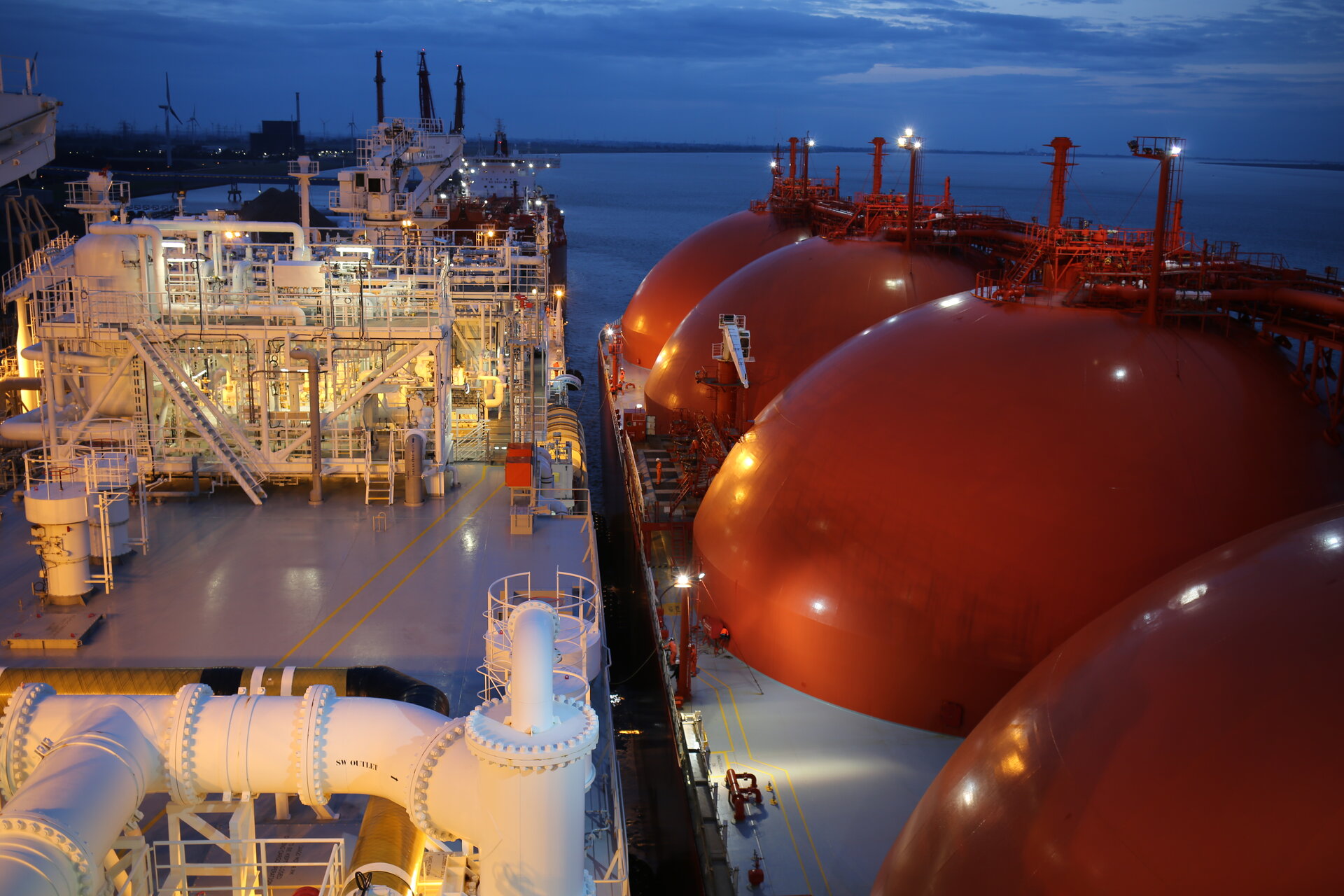
A floating LNG terminal, by contrast, is a vessel to which liquefied natural gas is delivered by LNG carriers. The vessel serves as the destination for LNG imports, while the source of those supplies remains flexible. LNG carriers supplying the floating terminal can load and depart from ports around the world, allowing Germany’s gas demand to be met from a variety of sources. LNG terminals are therefore fixed destinations for gas supplies whose points of origin and transport routes can vary across the globe.
A Diverse and Stable Gas Supply Helps Keep Prices Lower
The amount you pay for gas and the prices of many everyday products depend on a wide range of cost factors. The gas used for heating and industrial processes is traded on a global market. The broader and more diverse the supply available on this market, the more stable and lower prices can be. Conversely, the scarcer the commodity and the more limited the sources of supply, the greater the upward pressure on prices.
This was the situation in 2022, when Russian gas supplies to Europe fell away. The resulting reduction in supply drove up gas prices, as well as the prices of goods whose production requires natural gas.
Until 2023, Germany could only receive gas via international pipelines whose points of origin were fixed. When supplies from Russia were cut off, there was initially no alternative source with comparable flexibility. The newly established floating LNG terminals provide a rapid alternative by enabling LNG to be imported from a range of producing countries. This helps stabilise energy prices and strengthens the resilience of Germany as a place to do business.