
Published on:
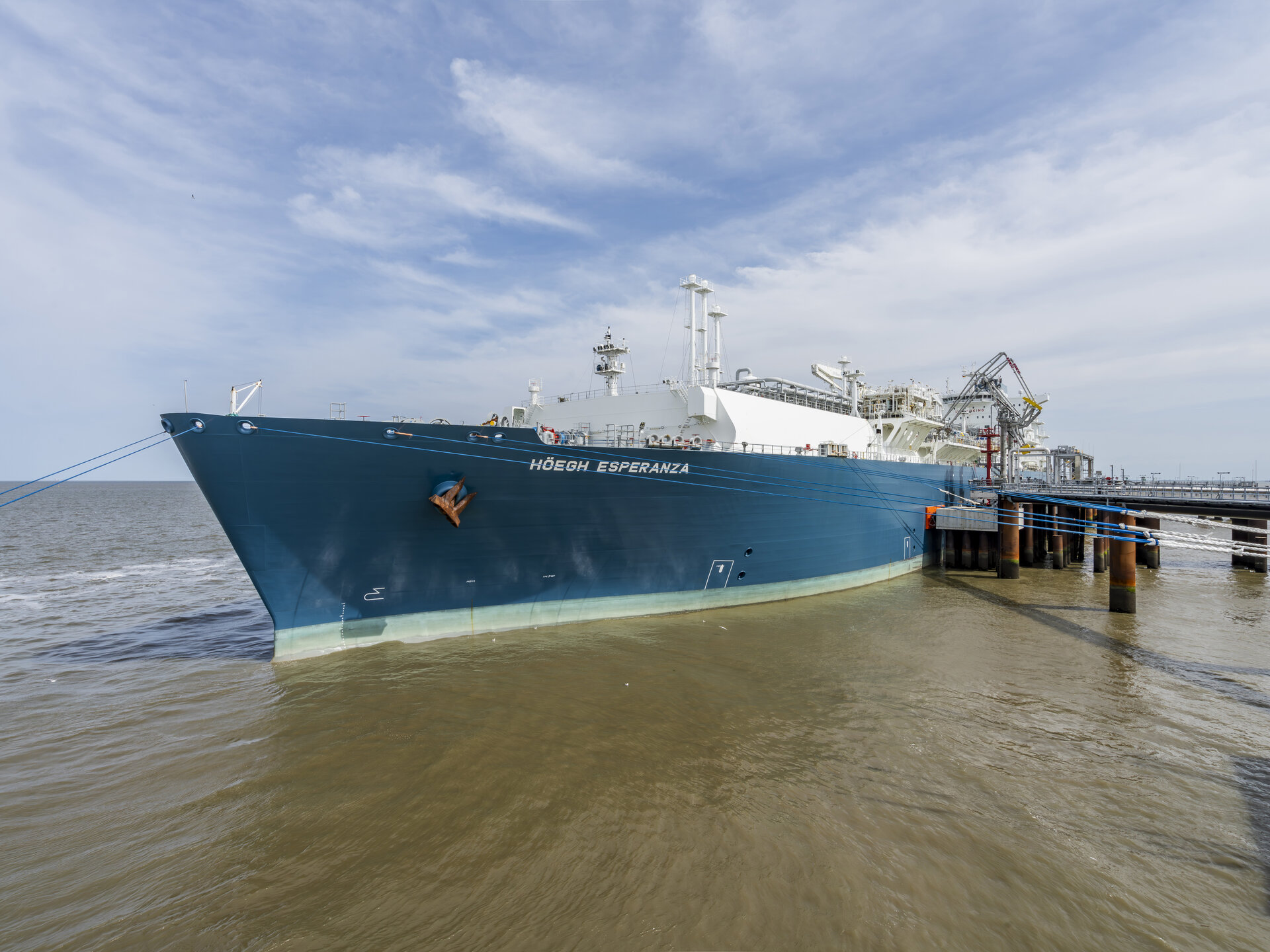
Seawater plays an important role in converting liquefied natural gas (LNG) back into gaseous natural gas when the process takes place on a floating storage and regasification unit (FSRU). However, because it is contained in a hermetically sealed circuit, the seawater does not come into contact with the LNG or natural gas. Seawater is important for the regasification process because, during warmer seasons, it can serve as a source of heat for warming the LNG and is used year-round to provide cooling for other processes.
HIGH SALINITY IN THE JADE
The Wilhelmshaven site presents particular challenges: at around 3%, the natural salt content of the seawater – consisting of dissolved sodium chloride – is very high. To put this into perspective, this is chemically and quantitatively equivalent to around two heaped tablespoons of table salt per litre of water. At the same time, the Jade is one of the most biologically active bodies of water in the world. As a result, microorganisms that are barely visible to the naked eye can enter the seawater circuits of ships.
Without a protection system, these microorganisms would gradually form a nutrient-rich biofilm inside the pipes. This in turn attracts barnacles and mussels, which use the biofilm as a food source, eventually clogging the extensive network of pipes on board (biofouling). This can lead to technical malfunctions and compromise operational safety; over time, a complete loss of the vessel's functionality would become highly likely.
STATE-OF-THE-ART TECHNOLOGY
Electrochlorination is the internationally recognised state-of-the-art method for preventing this and ensuring the proper operation of the vessel. The established process uses the naturally occurring salt already dissolved in seawater in the form of sodium and chloride ions. No external chemicals are required. Instead, the seawater is subjected to an electric current on board (electrolysis). This produces sodium hypochlorite, which prevents the formation of biofilm in the pipes even at very low concentrations.
The main effect takes place at the beginning of the FSRU's kilometres-long piping system. As the water travels through the vessel, the active chlorine compounds break down back into sea salt. As a result, only an extremely small amount of chemically active substance is discharged into the Jade at the vessel's outlet. The breakdown of the remaining traces continues immediately in the seawater. This process is also widely used in other parts of the shipping industry, is authorised under water legislation and has been confirmed by Germany's Federal Administrative Court as state-of-the-art technology.
COMPLIANCE WITH LIMIT VALUES
Compliance with the applicable strict limit values is monitored under the supervision of the competent authorities through systematic sampling of the surrounding seawater. In addition, during the three and a half years since the first FSRU began operating in Wilhelmshaven, no accumulation of substances in fish or mussels attributable to the use of electrochlorination has been detected at any time.