
Published on:
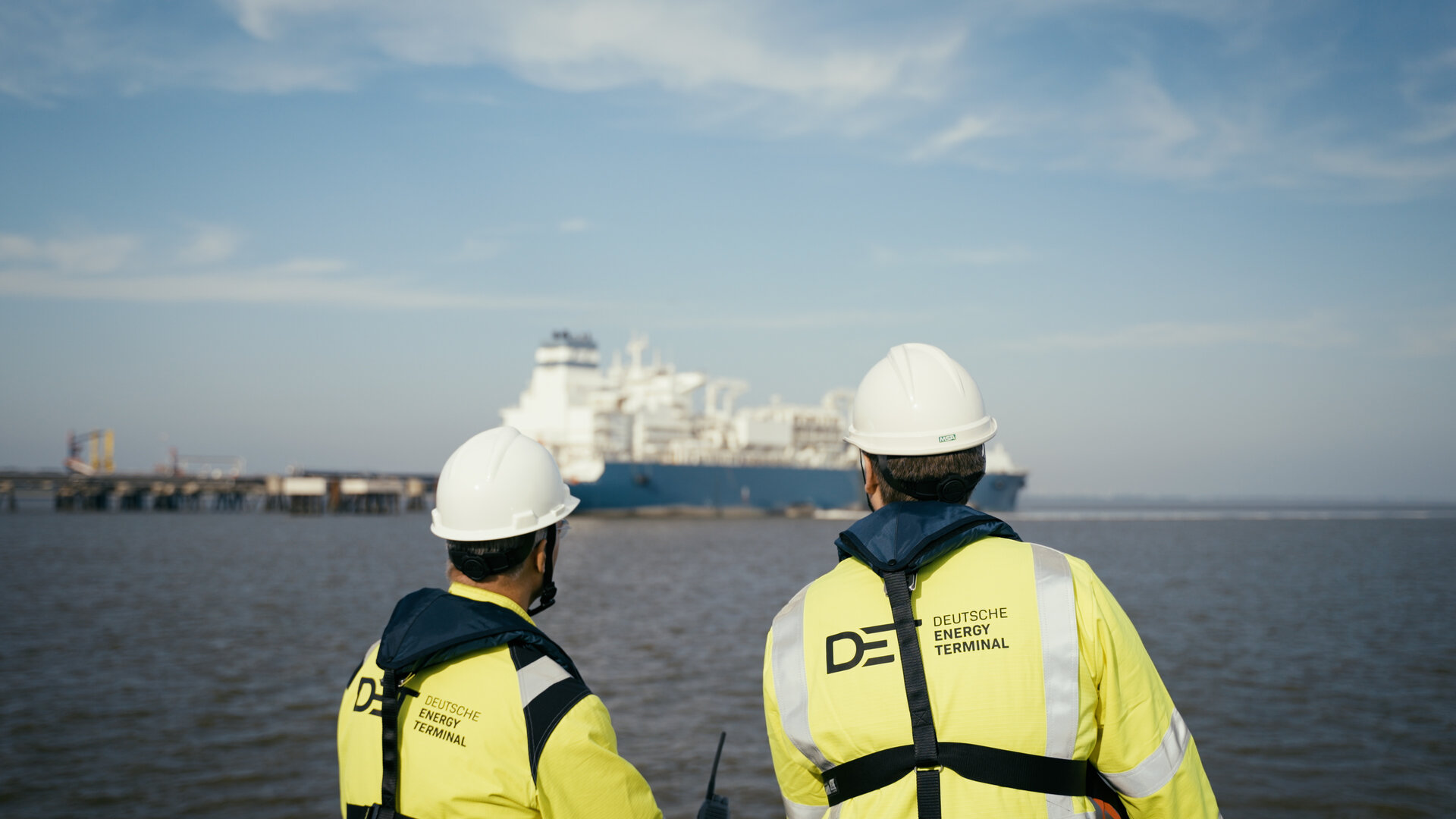
An LNG terminal is a technically complex industrial facility: highly sensitive gases, extreme temperatures and complex interfaces between ship and shore – all of this requires uncompromising safety systems. At DET, safety is not a principle displayed on a sign. It is an integral part of everything we do every day.
Technical Safety
At each of our terminals, pressure, temperature, gas concentrations and many other parameters are monitored around the clock by redundant systems, combined with human oversight. If a value deviates from the defined range, automated processes respond immediately: gas flows are stopped, valves are closed and the system switches to a reduced operating mode. In an emergency, the FSRU can even be rapidly disconnected from the berth – both automatically and manually by an operator.
The FSRU’s entire automation system centrally records all alarms, safety functions and operational data, enabling real-time monitoring and a rapid response. All safety-critical equipment complies with international standards, is certified and undergoes regular maintenance and inspection.
Early Detection
Since 2024, the EU Methane Regulation (EU 2024/1787) has required operators to regularly measure methane emissions. DET has installed a system using highly sensitive acoustic technology on the natural gas loading hoses. It detects potential leaks at an early stage and enables immediate countermeasures – enhancing both safety and environmental protection.
Organisation
No one enters the site without a safety briefing, the required personal protective equipment and authorisation. Certain activities on the terminal site also require a separate permit involving a risk assessment – so-called “Permits to Work”. These permits are time-limited and subject to clearly defined safety requirements. Training in first aid, fire protection and emergency response is also standard.
Safety as a Team Effort
Safe terminal operations are not the responsibility of any one individual. The Terminal Manager is in daily contact with port authorities, the fire service, technical service providers and the shipping company. There are also regular coordination meetings and situation assessments with the local emergency management authority, including the police, state security authorities and higher-level agencies. Regular emergency drills and tabletop exercises ensure that everyone involved can respond confidently and routinely in an emergency.
Going Beyond Legal Requirements
Operations follow international guidelines – including the standards of the United Nations International Maritime Organization (IMO) – and often go beyond what is legally required. Not because we have to, but because we believe it is the right thing to do. The respective inspections by the competent permitting authorities in Lower Saxony and Schleswig-Holstein have expressly confirmed the high level of safety achieved at each terminal.